
KI_IDENT – AI-based Identification of Neuralgic Points in Urban Traffic
Urban traffic networks frequently suffer from recurring local disruptions that reduce reliability and efficiency – particularly for vehicles operating in critical supply and service contexts. These bottlenecks are often known anecdotally by operators but are rarely captured systematically or analyzed at scale.
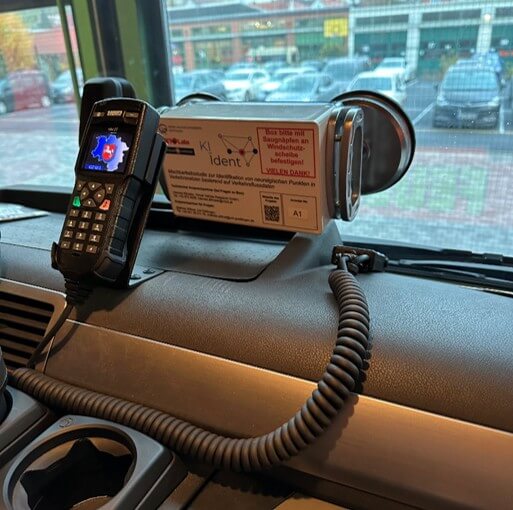
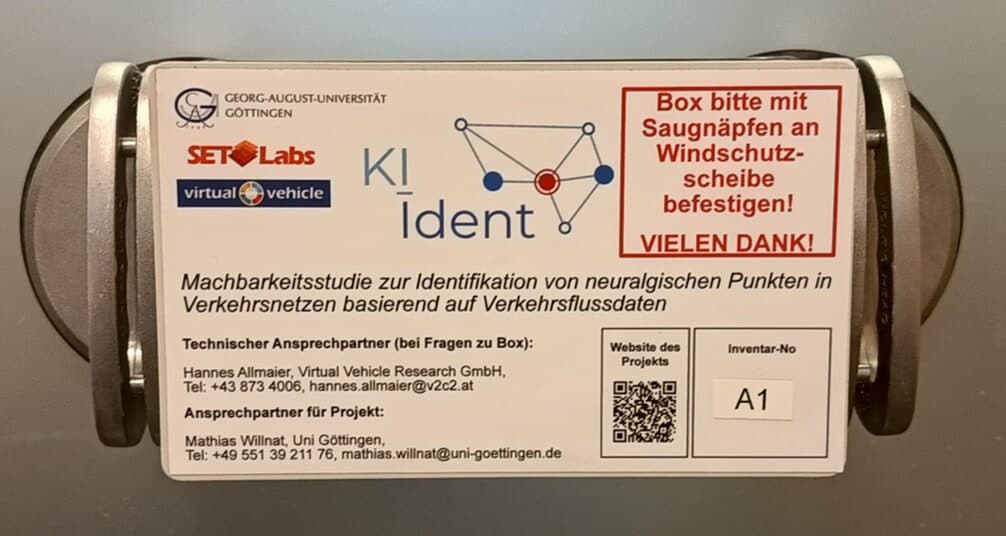
KI_IDENT investigated how artificial intelligence can be used to automatically detect neuralgic points in urban road networks and transform heterogeneous fleet data into actionable knowledge for infrastructure planning and operational optimization.
Project Motivation
Neuralgic traffic points arise from structural and situational factors such as:
- Illegal or obstructive parking
- Temporary or recurring blockages
- Road design constraints
- Insufficient infrastructure capacity
These disruptions are especially critical for:
- Emergency response vehicles
- Public transport fleets
- Waste collection and municipal services
Even minor but recurring delays at specific locations can accumulate into significant operational inefficiencies. Without systematic detection mechanisms, however, these locations remain difficult to quantify and prioritize.
Objectives
The project evaluated the feasibility of a software-based information system capable of automatically identifying neuralgic traffic points using AI methods. Core objectives included:
- Harmonizing movement data from different public vehicle fleets
- Detecting recurring disruption patterns in vehicle trajectories
- Translating analytical results into stakeholder-oriented decision support tools
- Enabling evidence-based infrastructure and traffic management decisions
Methodological Approach
KI_IDENT followed a structured, data-driven workflow:
1. Data Harmonization
Vehicle trajectory data from participating fleets were standardized and integrated into a unified analytical dataset.
2. AI-based Pattern Detection
Machine learning methods were applied to identify characteristic signatures of neuralgic points – such as recurring slowdowns, stop events, or deviations linked to localized traffic conditions.
3. Stakeholder-oriented Implementation
Analytical results were translated into interactive visual tools and dashboards, ensuring usability for planners and operators.
Validated Use Cases
To ensure practical relevance, the developed methods were validated through three concrete use cases in the city of Göttingen:
Use Case 1 – Evaluation of Intersection Modifications
In collaboration with the City of Göttingen, recently modified intersections were analyzed using fleet movement data. For predefined locations where traffic routing had been changed, the project assessed the measurable impact of these modifications on overall traffic flow and delay patterns. This demonstrated how AI-based analysis can support evidence-based evaluation of infrastructure interventions.
Use Case 2 – Analysis of Unplanned Bus Stops (GöVB)
Working with Göttinger Verkehrsbetriebe (GöVB), bus trajectory data were examined to identify unplanned stop events. By detecting recurring disruption stops along routes, the project provided insights into localized bottlenecks affecting public transport reliability.
Use Case 3 – Braking Behavior Assessment Using a Speed Transition Matrix
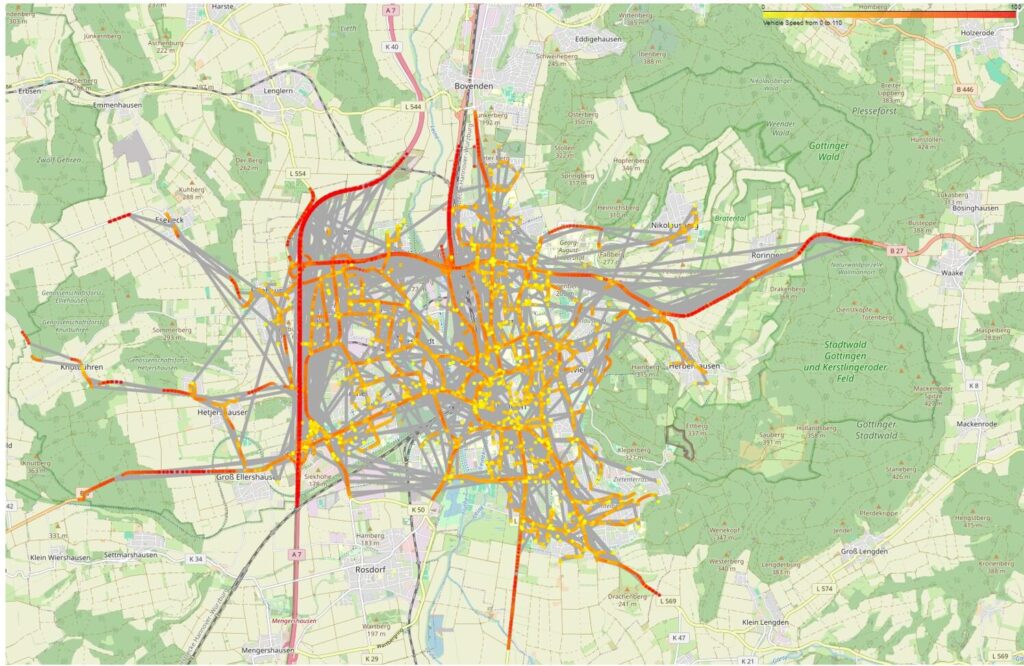
Using connected-car data, traffic flow dynamics across Göttingen were evaluated through a Speed Transition Matrix approach. This enabled the identification of locations with characteristic braking and deceleration patterns, indicating potential neuralgic points where congestion formation is likely.
The Role of SETLabs – Integrating Data, Detecting Bottlenecks, Driving Action
SETLabs was responsible for the technical integration, AI methodology, and operational translation of results. Key contributions included:
- Data integration: Fusion of multi-source fleet movement data with OpenStreetMap information into a city-wide graph structure, including map-matching procedures to spatially anchor and flag neuralgic points.
- Adapted machine learning for disruption detection:
- Development of a Speed Transition Matrix combined with fuzzy inference to estimate bottleneck probabilities
- Application of DBSCAN clustering to detect unplanned bus stops and recurring disruption events
- Impact analysis and decision support: Demonstration of crossing-modification impact analysis and implementation of actionable dashboards to inform both strategic planning and operational traffic management decisions.
Results and Impact
KI_IDENT demonstrated the technical feasibility of leveraging aggregated fleet movement data to systematically detect recurring traffic impediments in complex urban environments. The project showed that AI-driven analysis can:
- Reveal previously undocumented neuralgic points
- Quantify their operational relevance
- Support prioritization of infrastructure measures
- Increase transparency in urban mobility performance
The implemented use cases confirmed that the developed methods are not limited to theoretical detection but can directly support infrastructure evaluation, public transport optimization, and congestion risk assessment in real-world urban settings.
By combining large-scale data integration, tailored machine learning approaches, and stakeholder-oriented visualization, KI_IDENT laid the foundation for scalable, AI-supported traffic resilience analysis in urban transport systems.